Hollywood has a large influence in today’s
film industry. In this weeks reading by Christina Klein, she focuses on how
Hollywood and a number of Asian film industries are being integrated or as she
puts it ‘knitted together through transnationalisation of audiences, labour
pools, distribution networks and production capital’ (Klein, 2004:362). The
core of this article is around Hollywood and martial arts films, and how they are an example of cultural style or flow of globalization. My job was to establish whether they both still influence each other today.
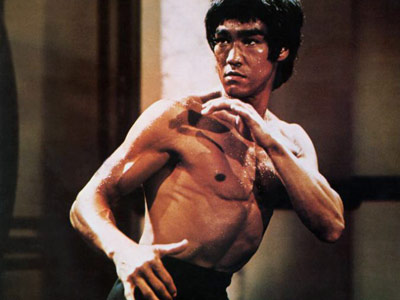
I think one of the first big Asian martial
arts film to hit the western shores of Hollywood was Bruce Lee ‘Enter the
Dragon’. Although it was the first
martial arts film produced by a major Hollywood studio, I did herald an influx
of other martial arts films from Hong Kong (King, 2013). It differed from other
traditional films of this genre like ‘Seven Samurai’ in that it appealed to
Western audiences perhaps because it was more catered for them by that I mean
it wasn’t dubbed.

‘To imply that
Hollywood completely homogenises global cinema would be to ignore the two-way
trade between America's dream factory and other nations' filmmaking industries’
(Jordan, 2003)
This of course then
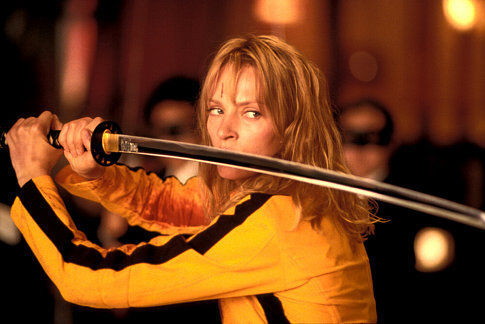
spawned more recent hit films in particular Quentin Tarantino's ‘Kill Bill’
which was modelled closely on these concepts of martial arts classic films and
delves deeply on Asian culture and traditions in particular Japanese.

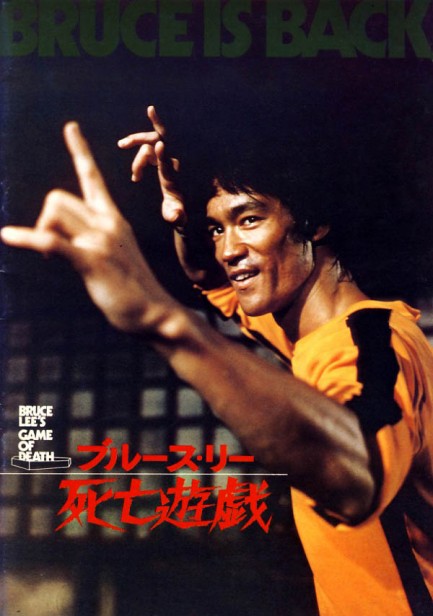
Uma Thurman's
character ‘The Bride” dresses up in a yellow suit to take on the crazy 88’s
which simulates Bruce Lee’ s outfit from the film ‘Game of Death ’(King, 2013).
Even though Kill Bill is painted on thick with Hollywood gloss the Asian
influence is vibrant and also subtle the whole way through.

Alternatively looking at the scenario from
the other angle Warner Bros Japan
has remade Unforgiven, the 1992 Oscar-winning western
starring Clint Eastwood, to be transformed into a Japanese samurai film
called Yurusarezaru
mono. Another western classic to be given a reboot is1990 US hit ‘Ghost’. ‘Ghost:
In Your Arms Again’ is a Korean-Japanese remake of the original (Soomee,2012). Again this emphasises that
this cultural flow is not one way.
Both Hollywood and
Asian cinema have a large influence on each other. This is not a one-way road,
both lanes are being used and frequently at that.
I feel that Klein puts
this best when she says that Hollywood and East Asian martial arts films is a
material product of a increasingly transnational, trans pacific mode of film production
(Klein, 2004:362)
- · Jordan, J, 2003, Hollywoodization of world cinema represents cultural colonialism, Pennsylvania State University, http://www.psu.edu/ur/todelete/oped/jordan.html
- · King, S, 2013, Classic Hollywood: Remembering Bruce Lee and martial arts films, Los Angeles Times, http://articles.latimes.com/2013/apr/15/entertainment/la-et-mn-kung-fu-classic-hollywood-20130415
- · Klein, C, 2004, Martial arts and the globalisation of the U.S and Asian film industries, Comparative American Studies, Massachusetts Institute of Technology
- · Soomee, P, 2012, Busan 2012: Remake Fever Hits Asian Film Sector, The Hollywood Reporter, http://www.hollywoodreporter.com/news/busan-2012-film-festival-remake-Flying-Swords-Dragon-Gate-Tsui-Hark-tracks-snowy-forest-376874
- · http://collider.com/wp-content/uploads/enter-the-dragon-bruce-lee.jp (Bruce Lee image:1)
- · http://i1-news.softpedia-static.com/images/news2/Uma-Thurman-Confirms-Kill-Bill-III-2.jpg (Uma Thurman image)
- · http://www.pulpinternational.com/images/postimg/death_proof_02.jpg (Bruce Lee image:2)